
Who Are the First Owners of an Inaugural Series?
The first owners of an inaugural series are people who care more about the number on the chassis than the date it arrives. In the luxury electric go kart world, that usually means car collectors, track day regulars and families who want something serious to share, not casual buyers hunting for a weekend toy.
An inaugural series is simply the first production run of a new model. It sets the standard that every later run gets measured against. That makes the first owners a particular kind of buyer. They are happy to commit before the crowd has weighed in, and they tend to know exactly what they want from the machine.
It helps to separate this group from the wider market. Plenty of people shop for a premium go kart by comparing a spec sheet and a delivery date. The first owners of a numbered series think more like someone buying an early chassis of a road car they believe in. They are buying into a story as much as a vehicle, and they want their name attached to the start of it.
Why Does a First Series Attract a Different Kind of Buyer?
A first series attracts a different buyer because it offers the one thing later runs never can: being first. Once a model is established, anyone can wait, read the reviews and buy one. The inaugural run only happens once, and the chassis numbers inside it can never be issued again.
Collectors understand this without needing it explained. In the car world, early production examples often draw extra interest because they show the original intent of the people who engineered them, before any later changes crept in.
The same thinking now applies to luxury electric go-karts, a segment that has grown up quickly and started to borrow the habits of the collector car market.
There is a practical side too. When a run is small and allocated by approval, the owners are known by name and chassis number, not by an order reference. That tends to mean a closer relationship with the maker, clearer communication during the build, and a sense that the car was made for a person rather than pulled from a warehouse shelf.
The Five Kinds of Buyer Drawn to an Inaugural Series
The people drawn to a first series tend to fall into five broad camps, and plenty of owners sit in more than one.
1. The car collector.
This buyer already keeps a few significant road cars and sees a numbered kart as a natural addition. They care about provenance, which simply means the documented history of who owned a vehicle and when.
2. The track day regular.
This driver spends weekends at circuits and wants real suspension and real feedback, not a toy. For them, a racing go kart has to stay settled through a corner, and the setup has to be something they can adjust.
3. The family with private space.
Some owners have an estate, a private track or a long driveway, and want a machine several generations can enjoy properly. Load capacity and build quality matter to them as much as how it feels on the move.
4. The design-led buyer.
This owner is drawn to the object itself: its proportions, materials and finish. They may drive it less than others but appreciate it more, the way some people keep a fine watch.
5. The early adopter.
This person likes being first to anything that is well engineered and electric. They enjoy the conversations that come with owning an early chassis number of something new.
What links all five is patience with the process and confidence in their own judgment. None of them needs a crowd to tell them the car is good.
What Does "Customizing" a Kart Actually Mean?
Customizing a kart means agreeing the details of your car with the maker before it is built, rather than picking one off a showroom floor. It is the difference between being allocated a vehicle and simply buying stock.
For a first owner, this is part of the appeal. The process starts with a conversation about how the kart will be used, who will drive it and where. A track day regular will think about how the car should feel at the limit. A family owner will think about how it handles different drivers. A collector will think about the record that comes with the chassis.
Setup is a big part of that conversation. On a properly engineered kart, the suspension is not fixed. Adjustable coilover damping, for example, uses a coil spring wrapped around a shock absorber, and lets you change how firmly each corner of the car responds to bumps.
Being able to tune that is what separates a serious premium go kart from a fairground ride. It means the car can be set up for a smooth private track one month and a tighter circuit the next.
How LIL ZOOMERS Approached Its First Series
LIL ZOOMERS approached its first series as a numbered, commissioned run rather than a line of identical stock. The GENOS R1, starting with chassis Nº R1·001, sits in the brand's range of luxury electric karts, built by car enthusiasts for collectors. Each chassis number has one owner, and reservations are by approval only.
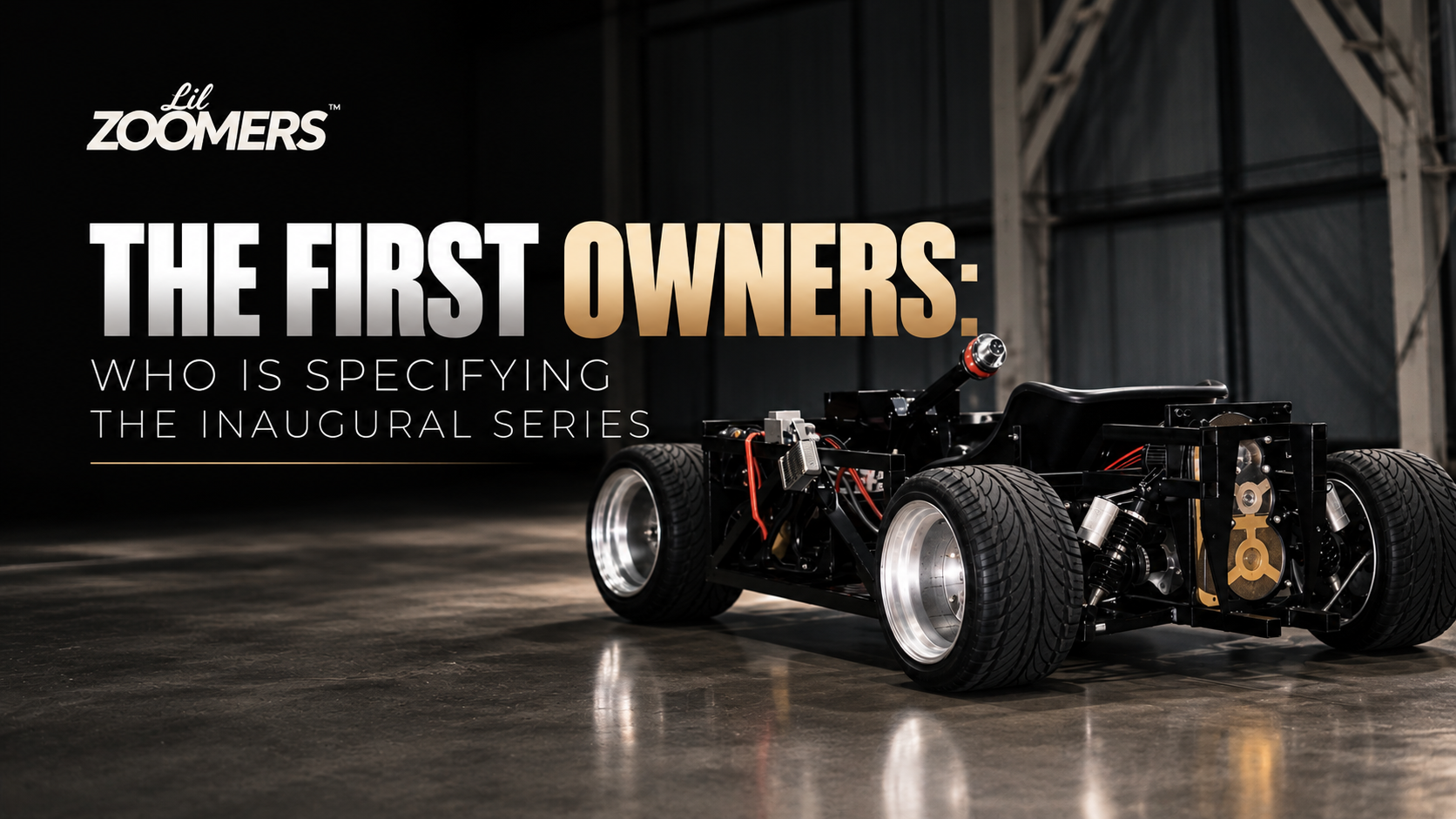
The engineering is where the series earns its place. The GENOS R1 uses a full vehicle architecture, which means it is engineered as a complete vehicle rather than a frame with a motor bolted on. It runs double wishbone suspension front and rear. That setup uses two arms at each wheel to keep the tire flat on the ground as the car moves, which is the same basic idea found on many serious road and race cars. Every corner has adjustable coilover damping, the load capacity is 650 lb, and the curb weight, meaning the weight of the car ready to drive with no one aboard, is 185 kg.
That is a different proposition from older collectible karts that became valuable almost by accident, years after anyone planned it. A manufactured, numbered, spec-driven series is designed with provenance in mind from day one.
The whole run was a limited series of 20 units, and those chassis numbers are nearly all spoken for. If a place in the inaugural series matters to you, the honest advice is not to wait on it.
Frequently Asked Questions
What is an inaugural series?
An inaugural series is the first production run of a new model. It is usually small, often numbered, and it sets the benchmark for any later versions. Because it only happens once, collectors tend to value it more than later runs.
Is a luxury electric go kart worth it compared with a standard kart?
A luxury electric go kart is worth it if you care about engineering, adjustable setup and long-term ownership. A standard kart is fine for occasional fun, but it rarely offers proper suspension or a documented history. The gap shows most when you drive often or plan to keep the car for years.
Why do numbered chassis matter to collectors?
Numbered chassis matter because they give each car a clear identity and a traceable history. A collector can say exactly which car they own and where it sits in the run. That record is a big part of what makes a vehicle collectible over time.
Can a first owner adjust the setup after delivery?
Yes, on a kart with adjustable coilover damping, the owner can change how firmly each corner responds. That lets the car suit different tracks, surfaces and drivers. It is one of the clearest signs of a serious racing go kart rather than a toy.
Where the First Owners Take the Segment Next
The first owners of an inaugural series shape how a whole segment is seen. Their choices tell everyone else what matters, and in luxury electric go-karts the message so far is clear: engineering, provenance and a proper ownership process count for more than headline numbers.
That is good news for anyone who values a machine built to be kept. As more serious buyers arrive, the line between a toy and a collectible will only get sharper, and the early chassis numbers will be the ones people remember.
If you want to see what a numbered, commissioned first series looks like in practice, spend a few minutes at lilzoomers.com and look closely at the GENOS R1. Start with the engineering, then decide whether one of the remaining chassis numbers belongs in your garage.