
What Delivery Day Really Feels Like
Anyone who has waited a long time for a car remembers the day it finally showed up. Not the paperwork before it. Not the deposit. The actual day it arrived. Delivery day feels different from every other step. It is the moment a plan turns into a real thing you can touch, with your name on it.
For a normal car, that day is simple. You get the keys. You sign a paper. You drive off. But some cars come with a numbered chassis. When that happens, delivery day feels bigger, almost like a small ceremony. There is a metal plate to look at. There are papers to match it. And there is a feeling that you are joining a short list of people who will ever own one.
That feeling is worth understanding before you spend a cent. The number on the frame and the paper that comes with it are not just for show. They are the two things that turn a regular car into a collector's item. And they shape how much the car is worth later, and how it feels to own.
What a Numbered Chassis Gives You
First, a quick plain-English definition. A chassis is the metal frame that the whole car is built on. A chassis number is a code stamped onto that frame. It works like a fingerprint. No two cars share the same one.
On a regular car, that number is boring. It is used for paperwork, like registration or recalls. Nothing special. But on a car where only a few are ever made, the number becomes the whole point.
Here is why. Say a maker decides to build only twenty cars. Then car number seven of twenty is fixed forever. No one can ever make more. That kind of rareness is built right into the metal. It is not just a claim in a brochure. And that is why collectors care so much about which number they get.
There is a word for this: provenance. It sounds fancy, but it just means the history of an object. Who made it, when, and everyone who has owned it since. A numbered chassis gives that history something solid to hang on. You can point to the number, link it to a build record, and follow it through every owner. Buyers pay more for a car with a clear history, because a clear history means fewer surprises.
One Number, One Owner
The simplest version of this is easy to picture. Each numbered car has one owner at a time, and the number stays with the car, not the person. That sounds obvious. But in the collector world, things can get messy. There are copies, rebuilt cars, and stories that do not add up. A clean numbering system, backed by real records, keeps that mess away. When you take the car home, you know exactly what you have and where it sits in the run.
The Paper Matters as Much as the Car
If the number is the proof you can touch, the certificate is the proof on paper. And in the collector world, paper is not just a formality. It can be the difference between a car that sells fast and one that no one wants.
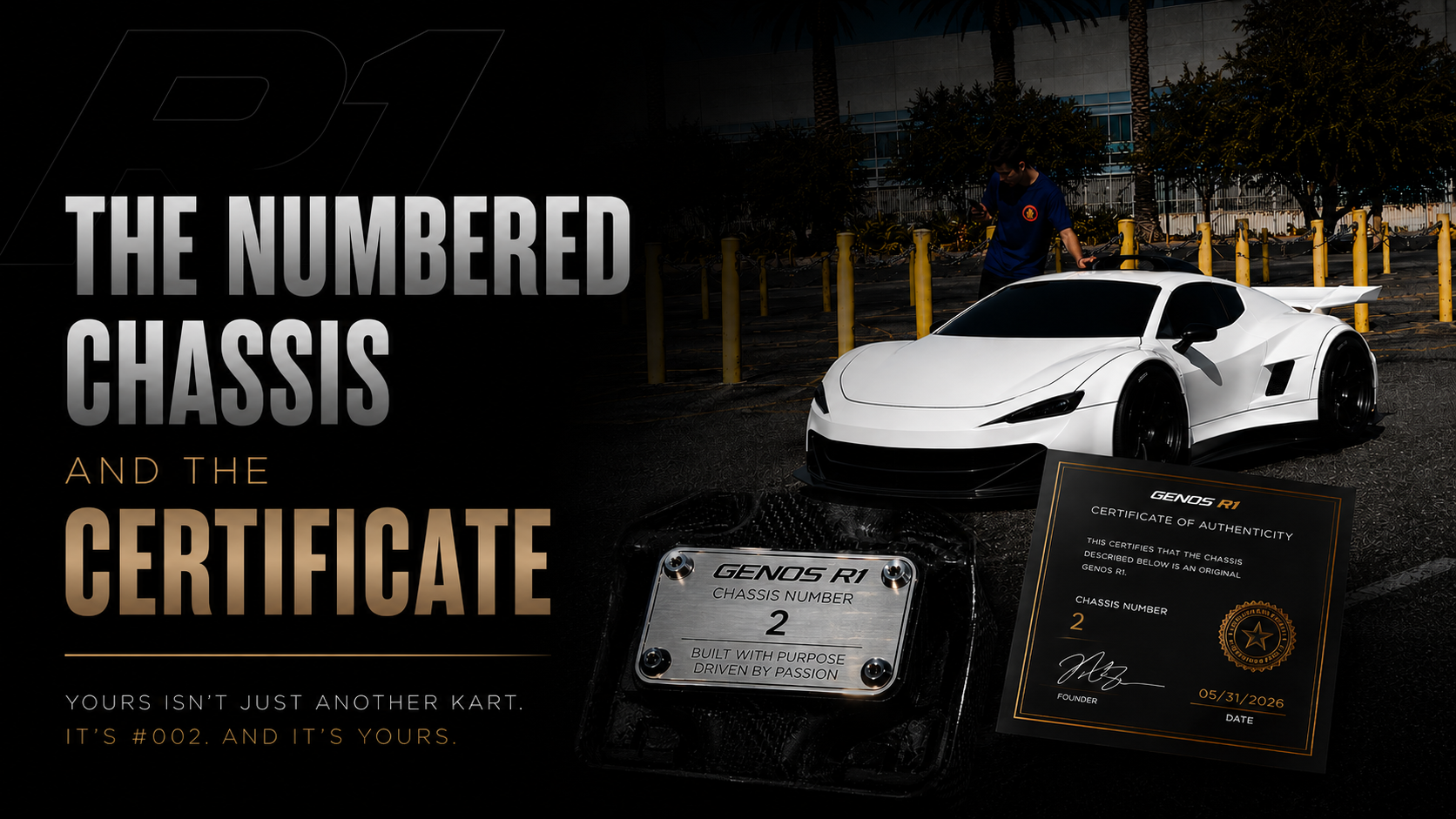
A good certificate does a few things. It ties the chassis number to the build. It confirms what the car came with when it left the factory. And it marks the start of the car's ownership record. Think of it like a birth certificate for the car. Without it, the next buyer has to just trust your word. And when big money is involved, people do not run on trust. They run on proof.
This is exactly why delivery day matters so much. It is your one chance to check three things while the car is right in front of you. Does the number on the frame match the number on the paper? Does the list on the paper match the car you are looking at? And is everything signed and dated the right way? Get this right on day one and you protect the car's value for as long as you own it. Skip it, and you might be stuck with a problem you only find out about years later, when you try to sell.
The good news is that none of this is hard. You just have to slow down and read what you are signing. Match it to the car in front of you. The excitement of delivery day is real. But the paperwork deserves five careful minutes before your first drive, not after.
Why a Planned, Numbered Series Is Different
Most collector cars become special by accident. Maybe the factory stopped early. Maybe most of them got wrecked over the years. Maybe tastes just changed. That is luck, not planning. It means a buyer is always betting on a story that has not finished yet.
LIL ZOOMERS works the other way around. The brand makes luxury electric karts for collectors, and it treats the numbered chassis as the plan from the start, not a lucky accident. Its top model, the GENOS R1, carries chassis No R1-001 and belongs to a run of just twenty. Each one is ordered on request, not picked off a shelf. Each is set aside for one owner, and spots are given by approval only.
What does that mean in plain terms? The history question is answered before you ever take delivery, not decades later. The GENOS R1 is designed and built as a real vehicle, not a toy. It has a full frame and body, double wishbone suspension front and back, which is a common car setup that lets each wheel handle bumps on its own, and adjustable coilover damping at every corner, which is a way to fine-tune how firm or soft the ride feels. It can carry up to 650 pounds and weighs 185 kilograms. Those are real specs you can write on a certificate and mean it, because they describe how the kart is actually put together.
The point is not that a planned, numbered build is fancier. The point is that it removes the guessing. When the number is on purpose, the run is fixed, and the papers are written before the first owner even sees the kart, delivery day becomes a simple check of something already true. It is not the shaky first step in a story you hope holds up.
What to Check Before You Sign
Delivery day rewards the buyer who treats it as more than a photo moment. Before your first drive, do three simple things. Match the chassis number on the frame to the number on the certificate, letter for letter and number for number. Read the spec list on the paper and make sure it matches the car in front of you. And check that the paper is signed and dated, with your name on the ownership record.
None of this ruins the fun. If anything, it makes the day better. You drive off knowing the car and the paper agree, and that what you just brought home will still tell a clean story years from now. That is what turns a purchase into something worth keeping, instead of just a machine you happen to have.
If a numbered chassis and a certificate that actually holds up is the kind of ownership you want, LIL ZOOMERS is built for exactly that. You can see it at lilzoomers.com, where the GENOS R1 and its chassis No R1-001 show what a planned, numbered series looks like from day one.