There is no Genos R1 sitting in a warehouse waiting for a buyer.
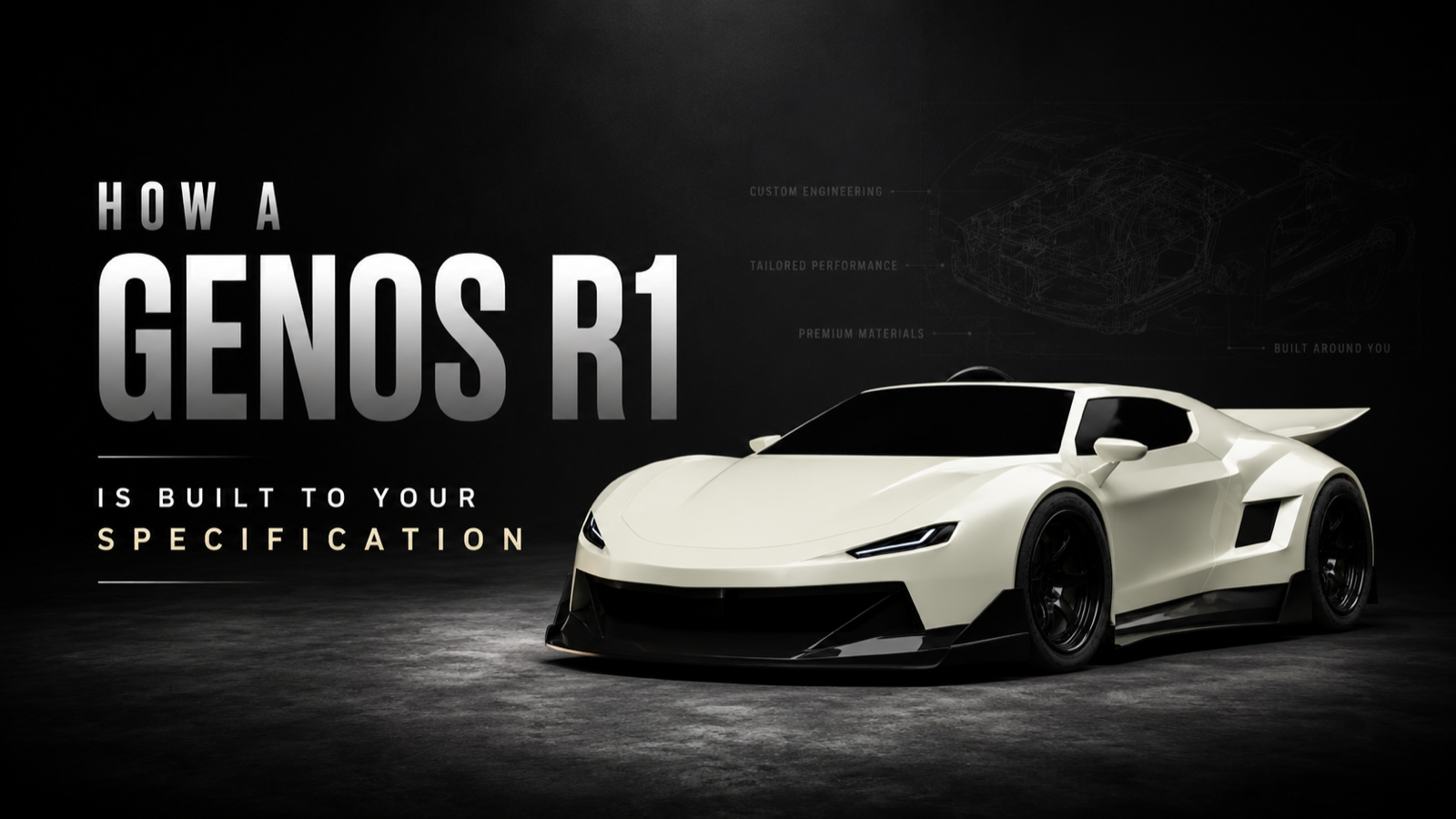
Every unit in the production run is manufactured in response to a specific owner, a specific brief, and a set of choices that are made before a single physical part is cut. The result is a machine that exists because you commissioned it, configured to your specification, validated before it ships, and different in its detail from every other R1 that leaves the facility.
This is how that process works.
Where Every Kart Begins: The Design Brief
The first step is not a checkout page. It is a conversation.
Before production opens on any unit, the LIL ZOOMERS team works through your vision with you. The design brief is the document that governs what gets built. It captures your color selection, your interior specification, your wheel choice, your aero configuration, and your drivetrain preference. Once the brief is finalized, it becomes the build reference that every subsequent step is measured against.
This matters because the Genos R1's customization options are not cosmetic add-ons applied to a generic base. Each configuration produces a different-looking, differently specified machine. The brief is how that configuration is captured correctly before production begins.
Color and Livery
The R1 is available in seven approved factory finishes: Neo Crimson, Graphite Metallic, Black Pearl, Frost White, Zeon Forest Metallic, Lunar Silver, and Caspian Blue Metallic. Each is a proper paint finish, applied to a fully-assembled chassis rather than added to a pre-painted shell.
Beyond the base color, each build supports livery personalization. Stripe configurations, accent treatments, and custom graphic elements can be specified through the brief. The visual result is not a product that looks like every other unit in the run. It looks like yours.
Interior and Fabric Selection
The R1's driving environment is configured as part of the brief. Interior fabric selection covers the seat and cockpit surfaces. The choices made here affect not just appearance but the feel of the driving position, the way the machine presents from the outside, and how the interior holds up across long-term use.
A machine built around serious ownership needs an interior to match. The brief process ensures the fabric selection is made deliberately, not defaulted to a single stock option.
Wheel Specification
The R1 runs forged wheels. Forged construction produces a lighter, structurally stronger wheel than cast alternatives at comparable size, and the difference in unsprung mass is something the suspension platform notices.
Wheel specification is made through the design brief. The visual profile of the wheel choice affects the finished kart significantly. It is one of the more visible decisions in the configuration process and one of the more consequential ones for driving dynamics.
Aero Configuration
The Genos R1 supports multiple aero configurations, including rear wing specification and front splitter options. Aero configuration is selected through the brief and applied during production rather than added as an afterthought.
The architecture of the R1 was developed to work with its aero components, not just to accept them as aesthetic additions. The configuration you select is the configuration the kart was designed to run.
Drivetrain Selection
The R1 is available in two drivetrain configurations: Standard and Performance. Both run the same brushless electric motor architecture and sit within the same chassis and suspension platform. The difference is in output and calibration.
Drivetrain selection is made at the brief stage and determined by how the kart will be used, the surface it will run on, and the preference of the driver. The LIL ZOOMERS team is available to discuss both options before the brief is finalized. For configuration details and pricing, contact the team directly.
3D Concept and FDM Prototyping
Once the brief is locked, the build moves into 3D concept modelling. The digital model reflects your specific configuration: every panel, every component, every specification choice applied to a representation of your unit before physical production opens.
From the 3D concept, the process moves to FDM prototyping for the components that benefit from physical verification at this stage. FDM prototyping allows dimensional and fitment checks to be completed in a controlled environment before the part is committed to production materials.
This step is not unique to complex builds. Every R1 goes through it. The reason is straightforward: an error identified in a prototype is corrected before production. An error identified after production is a problem.
Physical Production
With the brief confirmed, the concept validated, and the prototype checks complete, physical production opens on your unit.
The R1 is designed and built in the United States. The chassis is fabricated from 4310 chromoly steel: lighter than mild steel at the same wall thickness, with higher tensile strength. Chassis geometry was developed through simulation-driven structural analysis and confirmed through track testing before the production design was finalized. What is being manufactured for your unit is a structure with proven integrity, not an assumed one.
The suspension system, double-wishbone at every corner with dampening-adjustable coilovers, is assembled and set to the configuration specified in your brief. The hydraulic disc brake system is installed and calibrated. The brushless electric drivetrain is fitted and commissioned. The paint and livery are applied. The interior is trimmed.
Production is not divided into subcontracted stages assembled at the end. Every R1 is manufactured as a coherent unit, with each system integrated with the others from the start.
Pre-Delivery Validation
Before your unit ships, it is validated through the full production process. This is not a final inspection in the conventional sense. It is a confirmation that the machine behaves as the brief, the design, and the engineering all predict it should.
Every system is checked. Every configuration choice is verified against the brief. What leaves the facility is the machine that was commissioned.
Delivery and What You Receive
The Genos R1 is delivered fully assembled. There is no crate of components, no instruction manual, no mechanical assembly required from the owner. The machine arrives complete, configured to your specification, and ready for its first session.
Worldwide delivery is available. Lead times reflect the build-to-order production model and vary depending on current production scheduling. Tracking information is provided once the unit ships.
For international deliveries, the owner is responsible for any applicable customs duties or import fees. The LIL ZOOMERS team assists with logistics questions before and during the delivery process.
One Hundred Units
Production of the Genos R1 is limited to 100 units for this edition.
This is not a marketing ceiling. It is a production reality. Building a kart this way, with a full design brief process, 3D modelling, prototyping, and individual validation for every unit, takes time and focused capacity. One hundred is the number the process supports without compromise. There is no accelerated version of this build sequence.
When the run is complete, it is complete. The 100 units in this edition will carry this build designation. Each one is different in its configuration. Each one is manufactured specifically for its owner.
The brief process is how you become one of them.
The Genos R1 is not intended for road use. Helmet and appropriate safety gear required during operation.